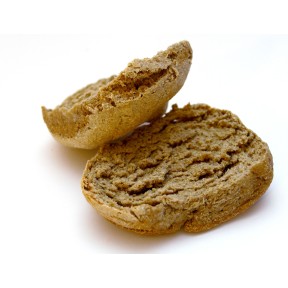
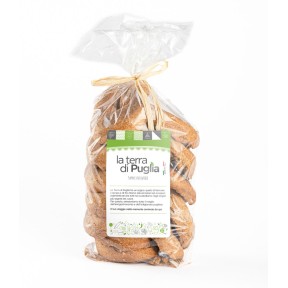
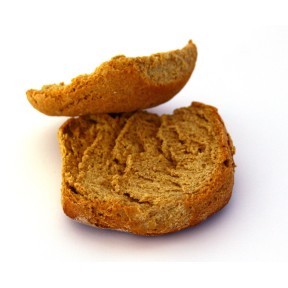
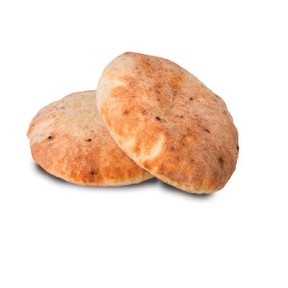
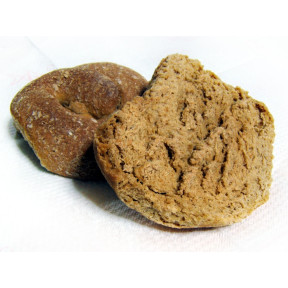
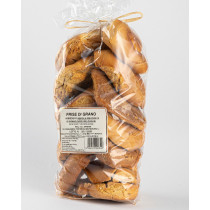
Barley frisa, or barley frisella, from the tradition of Puglia and Salento: baked twice for its crunchy texture, with flours from grains grown around Cutrofiano. Soak it in water and top it with extra virgin olive oil and fresh tomatoes. 800 g pack.
Barley flour (58%), water, type “0” flour, salt, natural yeast
Suitable for
Vegani
Short production line / 0 Km
Si
Specific References
EAN13
8052080670163
Description
🥖
Barley Frisa
“A frisa, a little oil, some salt and a tomato, and dinner was served.”
The barley frisella of Apulian and Salento cooking: bread baked twice, dry and crunchy, with flours from grains grown around Cutrofiano.
Barley flourBaked twice800 g pack
Barley frisa, also called barley frisella in Puglia, is a traditional food of Apulian and Salento cooking, loved for its simplicity and versatility. It is a rusk-like bread made with barley flour, baked twice to get a dry, crunchy and crumbly texture. An ancient food, born in the farming culture of Southern Italy.
All the flours used for these frise come from locally grown grains, in the fields around Cutrofiano and the nearby villages. A choice that values our land, supports small farmers and gives a genuine product with a very short supply chain.
How they are made
Baked twice, a loaf cut in half
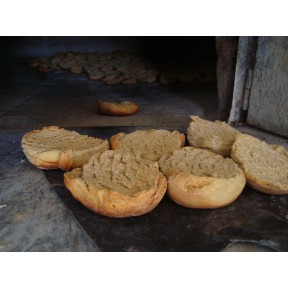
A frisa is a loaf cut in half horizontally and dried in the oven: baking it twice is what makes it dry, crunchy and long-lasting.
1
The dough
It starts with barley flour, worked into a dough that is divided into loaves.
2
First baking
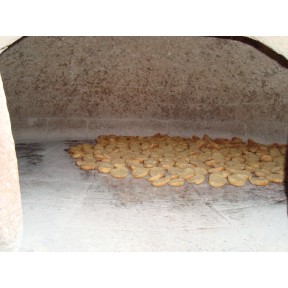
The loaves are baked a first time in the oven.
3
The cut
They are cut in half horizontally: each loaf gives two frise.
4
Second baking
Back in the oven they go, until they reach their typical dry, crunchy texture.
The tradition
The bread of the poor, for the fields and for travelling
The frisella was once the bread of the poor: always good, put aside for hard times and brought back to life with just a little water. A frisa, a little oil, some salt and a tomato, and dinner was served.
Because baking it twice makes it last so long, it was the bread people took with them when working in the fields or on a journey. And still today, here in Puglia, it isn't summer unless dinner is a frisa every now and then — actually, quite often.
At the table
How to top a barley frisa
💧
First, soak it
Dip the frisa in water for a moment, until it is as soft as you like.
🍅
The classic
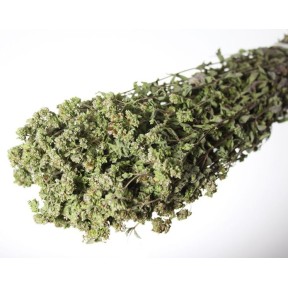
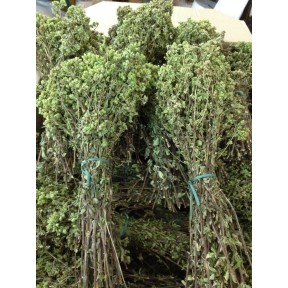
Fresh tomatoes, extra virgin olive oil, salt and oregano.
🫒
Richer
Add capers, olives, tuna or vegetables, to your taste.
Reply from the shop La frisa d'orge a su vous convaincre, et cela nous fait très plaisir. Bonne dégustation !
L'équipe La Terra di Puglia
Verified buyer
in Italian
Buonissime!!!
Reply from the shop Tre punti esclamativi per le frise d'orzo ci hanno messo di buon umore. Grazie davvero.
Il team La Terra di Puglia
Verified buyer
in Italian
Frise d orge excellente. La prochaine fous j essaie les frise d épeautre.
Reply from the shop Ravis que la frisa d'orge vous ait plu ! Nous espérons que celle à l'épeautre vous séduira tout autant lors de votre prochain essai.
L'équipe La Terra di Puglia
Verified buyer
in French
TRes bon produit l'orge a un tres bon gout .......
Verified buyer
in German
Sehr leckere geschmackvolle Brötchen. Sehr knusprig
Reply from the shop Knusprig und geschmackvoll, so beschreiben wir unsere Gerstenfrise auch am liebsten. Vielen Dank für Ihre freundliche Bewertung.
Ihr Team von La Terra di Puglia
Verified buyer
in French
Tres bonnes Frises bonne qualité tres fraiches ....
Reply from the shop Merci pour ce bel avis sur nos frises d'orge : nous sommes ravis que leur qualité et leur fraîcheur vous aient plu.
L'équipe La Terra di Puglia
Verified buyer
in Italian
Frisa di ottima qualità. Ho ritrovato il gusto della mia giovinezza.
Reply from the shop Ritrovare il gusto della propria giovinezza in una frisa d'orzo è qualcosa che ci emoziona. Grazie per averlo condiviso con noi.
Il team La Terra di Puglia
Verified buyer
in French
Première sur ce site, produit fragile qui a bien été emballé et livré avec soin. Frises excellentes soit de blé ou d'orge. Je recommanderai sur ce site.
Reply from the shop Merci d'avoir remarqué le soin apporté à l'emballage : avec un produit aussi fragile que la frisa, c'est essentiel. Nous sommes heureux que cette première expérience sur notre site vous donne envie de nous recommander.
L'équipe La Terra di Puglia
Verified buyer
in Italian
Saporite e versatili Le uso anche per fare la panzanella
Verified buyer
in Italian
Eccezionali!!! Tutto perfetto, per me esperienza da ripetere assolutamente!
Reply from the shop «Esperienza da ripetere»: non potremmo desiderare un commento migliore per le nostre frise d'orzo. Grazie per tanto entusiasmo!
Il team La Terra di Puglia
Verified buyer
in Italian
Tutto speciale! Prodotti buoni buoni. Top! Consigliatissimo
Verified buyer
in French
Tout est parfait merci beaucoup ce sont de trés bonnes frises ..
Verified buyer
in Italian
Tutto molto buono, ho ritrovato i sapori della mia terra, complimenti davvero
Verified buyer
in French
Excellent dommage que l’envoi et cher
Verified buyer
in Italian
Le frise di orzo sono di qualità, fresche e consegnate in tempi rapidissimi. Esperienza da ripetere. 👏👏
Verified buyer
in Italian
ottima quelle con l'orzo sono più difficili da trovare ma sono le migliori e queste sono fra quelle
Verified buyer
in Italian
prodotto top ottime per cene estive e apericena
Reply from the shop Cene estive e apericena: le occasioni perfette per le frise d'orzo, ha proprio ragione. Grazie per averlo scritto.
Il team La Terra di Puglia
Verified buyer
in Italian
Tutto ok. Arrivato pacco integro in ottima conservazione
Verified buyer
in Italian
Ottimi prodotti si nota qualità nella produzione e nel gusto, complimenti
Verified buyer
in Italian
Friselle buone. fresche e croccanti, consigliate
Verified buyer
in Italian
Buonissime e particolari ne ho prese solo due pacchi perché non ricordavo dopo tanti anni lontano dalla mia terra che gusto avessero ....certamente recupererò al prox ordine !!
Verified buyer
in Italian
Ottimi prodotti, servizio di consegna molto rapido
Verified buyer
in Italian
Buonissime… Sono proprio come me le ricordo da bambino…
Verified buyer
in Italian
Dopo tanto cercare e dopo aver preso innumerevoli fregature, finalmente ho trovato un prodotto di qualità… Le frise sono proprio come quelle che mangiavo da bambino quando scendevo nel Salento a trovare i miei nonni…
Verified buyer
in Italian
Squisite!! ottimo prodotto con autentici sapori del sud
Verified buyer
in Italian
Sapore buonissimo, come se fossi in Puglia dal mio solito fornaio.
Verified buyer
in Italian
Adoro queste frise di orzo che non si trovano da nessuna parte se non in Puglia! Grazie mille!
Verified buyer
in Italian
ottime, mai assaggiate delle frise così buone
Verified buyer
in Italian
molto buoni, ma un po' cari peccato
Verified buyer
in Italian
Mi sono trovato molto bene...mi dispiace solo x l’aumento delle frise all orzo... comunque ottimo
Verified buyer
in Italian
Squisite. Con ottimo olio pugliese sono divine. Per tutte le frese maggiore attenzione durante la spedizione.
Verified buyer
in Italian
Saporito. Con rucola e pomodorini,top. Fa compagnia, in questo periodo più del solito .
Verified buyer
in Italian
Superlative le ricomprero.....................
Verified buyer
in Italian
Ottimo come le ricordavo quando le mangiavo in Puglia anni fa
Verified buyer
in Italian
Ottime frise artigianali, sponzate e non ve ne pentirete!
Verified buyer
in Italian
arrivato velocemente ed in perfette condizioni :) veramente 5 stelle meritate
Verified buyer
in Italian
Le mie preferite! Quelle d’orzo hanno quel tocco in più
Verified buyer
in Italian
Imballaggio scarso. Friselle rotte
Verified buyer
We also publish critical reviews, and we only ask customers who have received an order. Reviewers then get a thank-you voucher, the same whatever the rating. How we collect reviews
 Italiano
 English
 Français
 Deutsch