🌿
Paparina, Wild Greens from Salento
“The herb that Salento farmers still forage in the fields, now ready in a jar.”
Paparina is the green part of the poppy plant, a wild, foraged herb that colours the Apulian countryside every spring. Our jar comes already cooked in olive oil, following the original Salento recipe: just heat it up.
Wild herb from Salento Original recipe Already cooked in oil
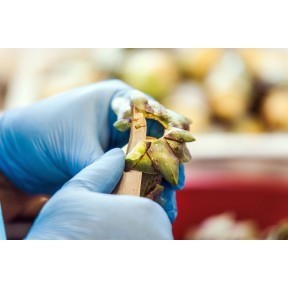
Paparina is the green part of the poppy plant — the same plant that, once in bloom, turns the fields of Puglia into stretches of bright red every spring. It's a wild, foraged herb: gathering it in the fields is something Salento farmers, their wives and the older generation have always done. Its flavour is plain and honest, the taste of the land it comes from.
Picking and cleaning it takes patience: it needs several rinses to remove the soil, then a slow, careful cooking. Our jar does that work for you: paparina already cooked in Salento olive oil, following the original recipe, ready to heat up and bring to the table.
The tradition
How paparina is cooked
In Salento, paparina is prepared this way, passed down from family to family:
1 |
It's rinsed It goes into plenty of cold water and gets rinsed several times: there's always soil to remove. |
2 |
It's cleaned Dead leaves and stray threads are removed, then it's rinsed once more. |
3 |
It's cooked raw In Salento it's called «paparina spritta o fritta»: it goes straight into the pan raw, without blanching, with a generous drizzle of olive oil. |
4 |
Spring onion and olives A little spring onion and Salento's own small olives (olive celline) go in too, seasoned with salt, then covered. |
5 |
It wilts on its own No need to add water: the greens wilt naturally with the heat, turning darker and softer as they cook, stirred every so often. |
Wild herbs of Salento
Not every wild green is cooked the same way
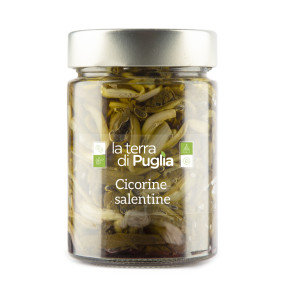
Paparina isn't the only wild herb foraged in the Salento countryside: there are also cicorine (or cicorie creste) and zanguni, the local dandelion greens. But they're cooked differently — those are blanched in water first and then enjoyed however you like, often turned into a soup with tomato and spring onion, or simply dressed with oil and garlic.
Paparina, instead, goes straight into the pan raw, without blanching. That's what sets it apart, and why in Salento it has always had a name — and a way of cooking — all its own.
| 💡 |
Our jar is ready to enjoy: just heat it up and bring it to the table, perhaps with a slice of good toasted bread. |
Product sheet
At a glance
| Product |
Paparina cooked in Salento olive oil |
| What it is |
The green part of the poppy plant |
| Origin |
Salento, Puglia |
| Category |
Traditional Apulian products |
| How to enjoy it |
Heat and serve |
Frequently asked questions
Everything you want to know
What is paparina?
It's the green part of the poppy plant: a wild herb typical of Salento, foraged in the fields by farmers every spring.
Is the jar ready to eat?
Yes: the paparina is already cooked in olive oil, following the original Salento recipe. Just heat it up.
How is fresh paparina cooked, for those who forage it themselves?
It's rinsed several times to remove the soil, then cooked raw in a pan with olive oil, spring onion and small olives, without blanching first: in Salento it's called «paparina spritta o fritta».
Is it the same as cicorine or zanguni?
No: those are other wild herbs from Salento, but they're cooked differently, since they need to be blanched in water before eating.
🌾
The taste of the Salento countryside
Paparina brings a piece of Apulian farming tradition to the table, ready in the jar: just heat it up.
💬 Write to us
 Italiano
 English
 Français
 Deutsch